Megalithic Architecture
Geopolymers are inorganic aluminosilicate polymers. When volcanic ash or clay reacts with an alkaline solution, it forms a dense, ceramic-like 3D network that sets at ambient temperature into artificial stone.
Ancient geopolymers
Building on Joseph Davidovits' work at Pumapunku, our field research in Cusco looks for the chemical, isotopic and structural signatures of geopolymer casting in megalithic masonry.
- Polygonal masonry of Sacsayhuamán
- Ashlar masonry of the Qorikancha
- Huaca Sapantiana and adjacent sites
Modern geopolymers
The same chemistry offers a lower-carbon alternative to Portland cement, with high durability and fire resistance. We are developing formulations for building and fabrication.
- Low-temperature, low-carbon binders
- Cast architectural elements
- Formulation research & testing
Innovation & energy
Geopolymers as solid-state batteries and structural energy storage: innovative geopolymer technologies designed for energy production and storage.
- Solid-state geopolymer batteries
- Structural energy storage
- Self-sufficient systems
Evidence of geopolymer concrete in megalithic architecture of Cusco, Perú
Spectral, geochemical and microstructural analyses of material samples from Cusco's megalithic structures. The paper reports clear indications of geopolymer chemistry and masonry casting, from Sacsayhuamán to the Qorikancha.
| Ca/Si molar ratio | ≈ 0.12Nearly identical across samples |
|---|---|
| Si/Al ratio range | 2.17 – 5.54Within poly(sialate) structural ranges |
| Cationic saturation index | ≈ 1.0Near stoichiometric balance |
| Chlorine, Qorikancha | > 70× baselineRelative to natural andesite |
| Th/U mass ratio | ≈ 2.88Gamma spectroscopy |
| Biological marker | Fossil microarthropodSapantiana sample 2B |
Reaction of efflorescence and mineral salt deposits under ultraviolet light.
Radionuclide signatures measured against local geological baselines.
Scanning electron microscopy of binder phases and mineral grains.
Energy-dispersive elemental mapping and atomic ratios.
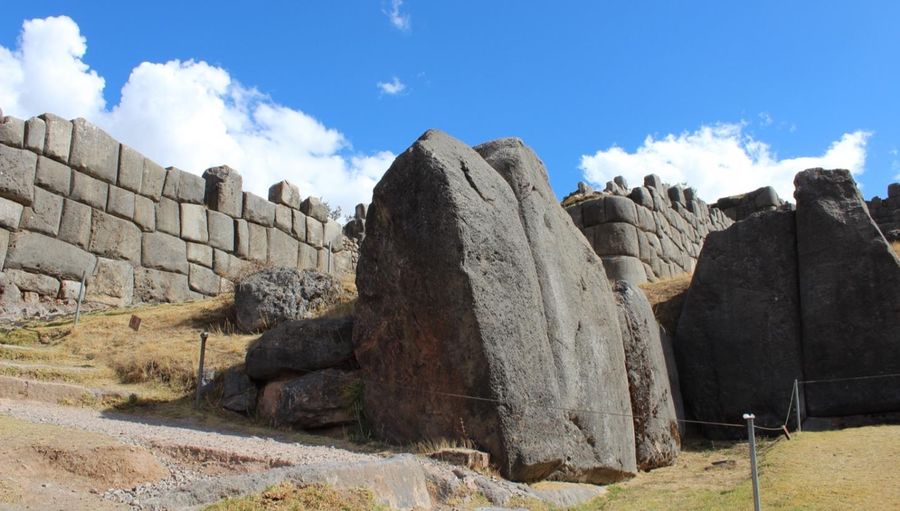
13.509° S · 71.982° W
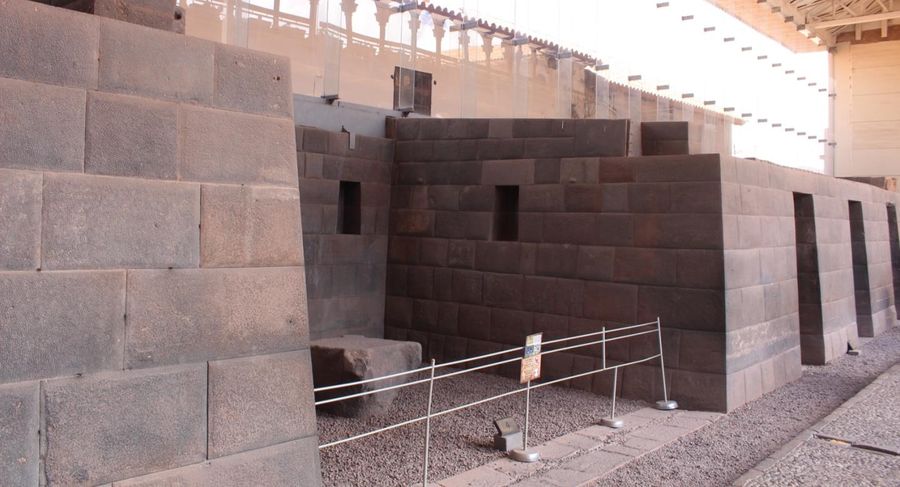
13.520° S · 71.975° W
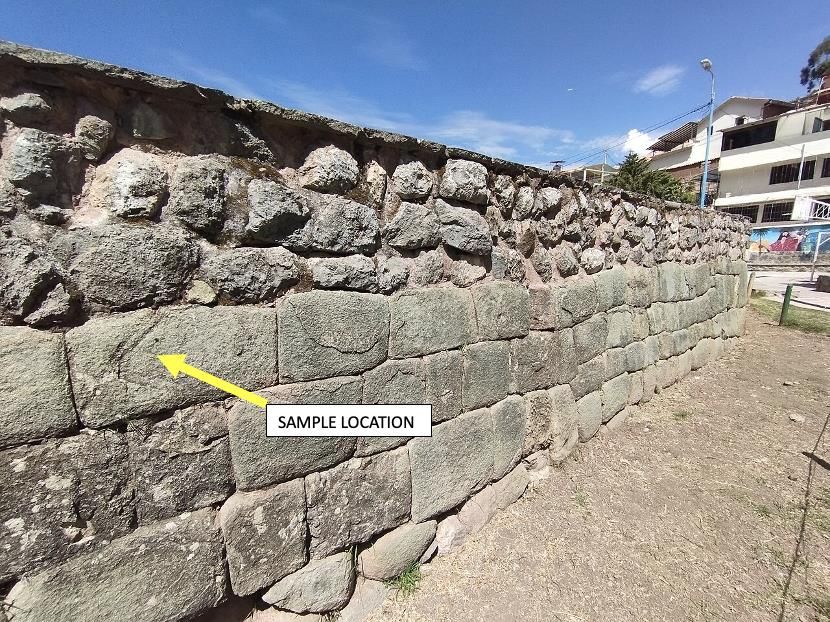
Cusco, Perú